Share:


The High-Cost Reality of Downtime
What if the most expensive part of your heavy machinery operation isn't the machine itself, but the waiting? In the high-stakes world of construction, mining, and energy, every moment a critical piece of equipment sits idle, revenue evaporates. This is the costly, persistent enemy known as downtime.
For years, the industry's response to an inevitable mechanical failure was purely reactive. A machine breaks down on-site, a technician runs a diagnosis, and then the stressful, all-hands-on-deck call goes out for a hot-shot freight service. This immediate, frantic scramble—while necessary—is costly, stressful, and, most importantly, late. The damage to the schedule and the budget has already been done.
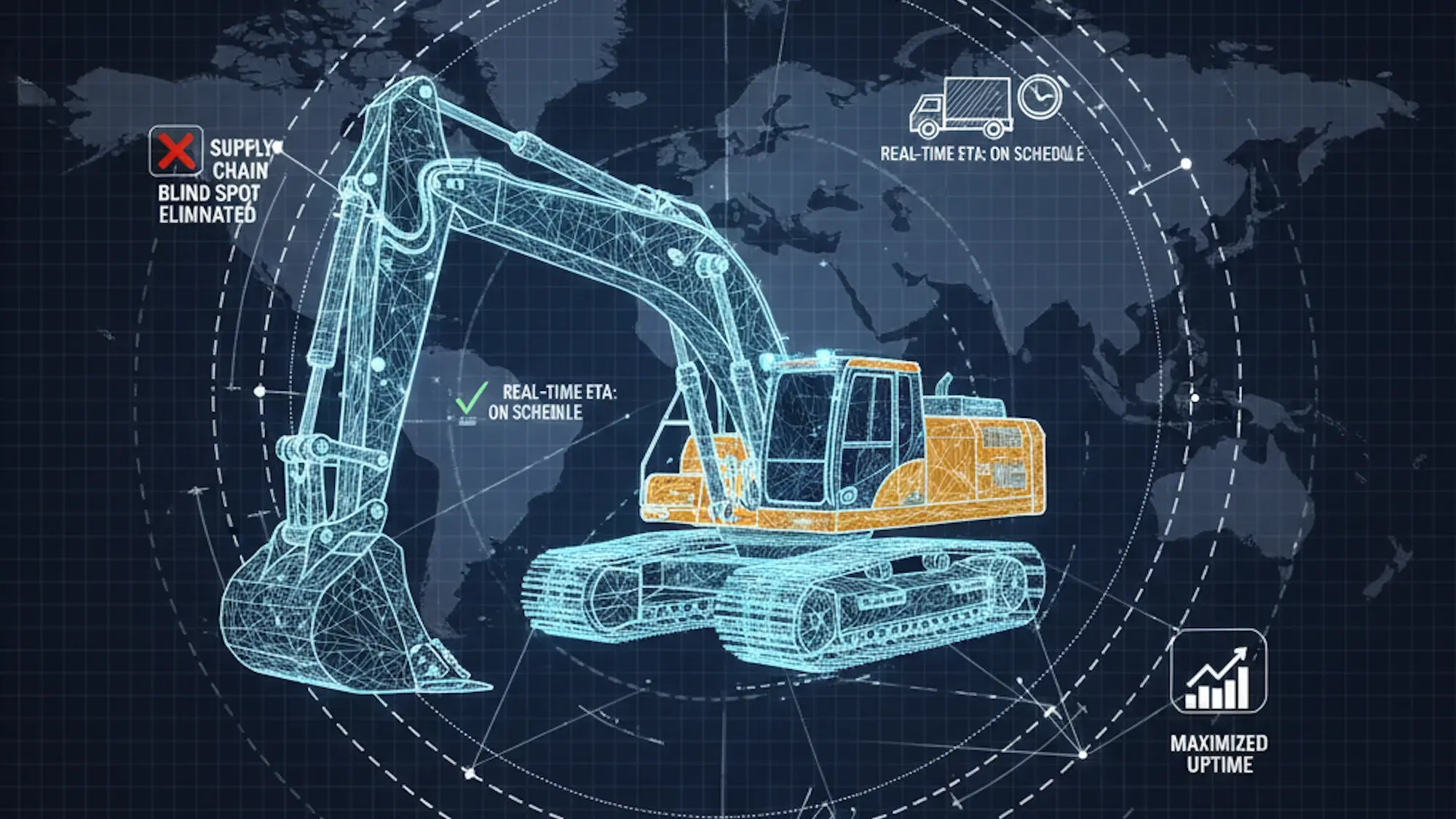
But what if you could predict that failure? What if the necessary replacement part was already moving toward your job site before the machine ever gave out? This is the paradigm shift driving the future of Specialized Freight Management (SFM). We are moving from a reactive vs. proactive response to a state of proactive prediction. This is the power of AI and predictive logistics as they integrate machine data with the supply chain to guarantee equipment uptime.
The Uptime Imperative: Understanding the True Cost
Do you truly know what unplanned downtime cost you last quarter? It’s rarely just the hourly wage of the operator. To understand the importance of uptime, we must quantify the true cost.
Industry analysis consistently shows that unplanned heavy machinery downtime can cost companies anywhere from $10,000 to over $50,000 per hour, depending on the project's scale and type.
But the bleeding doesn't stop with the clock.
Consider the cascading costs often overlooked:
-
Labor Inefficiency: Full crews stand idle, waiting for a component that is still hours or days away. You are paying productive wages for non-productive time.
-
Contractual Penalties: Missing project milestones directly result in financial penalties and client dissatisfaction.
-
Brand Damage: Repeated failures to maintain equipment reliability erode client trust, impacting future bids and long-term contracts.
The truth is that a logistics failure is, in fact, an operational failure. As we've previously explored, achieving end-to-end visibility for project shipments is critical for clarity. Today, the true value of a strategic logistics partnership is no longer measured in transit time alone, but in guaranteed uptime.
The Core Technology: Blending Telematics and AI
How does a logistics provider move from merely being a delivery service to becoming a partner in guaranteed uptime? The answer lies in the fusion of equipment data and artificial intelligence.
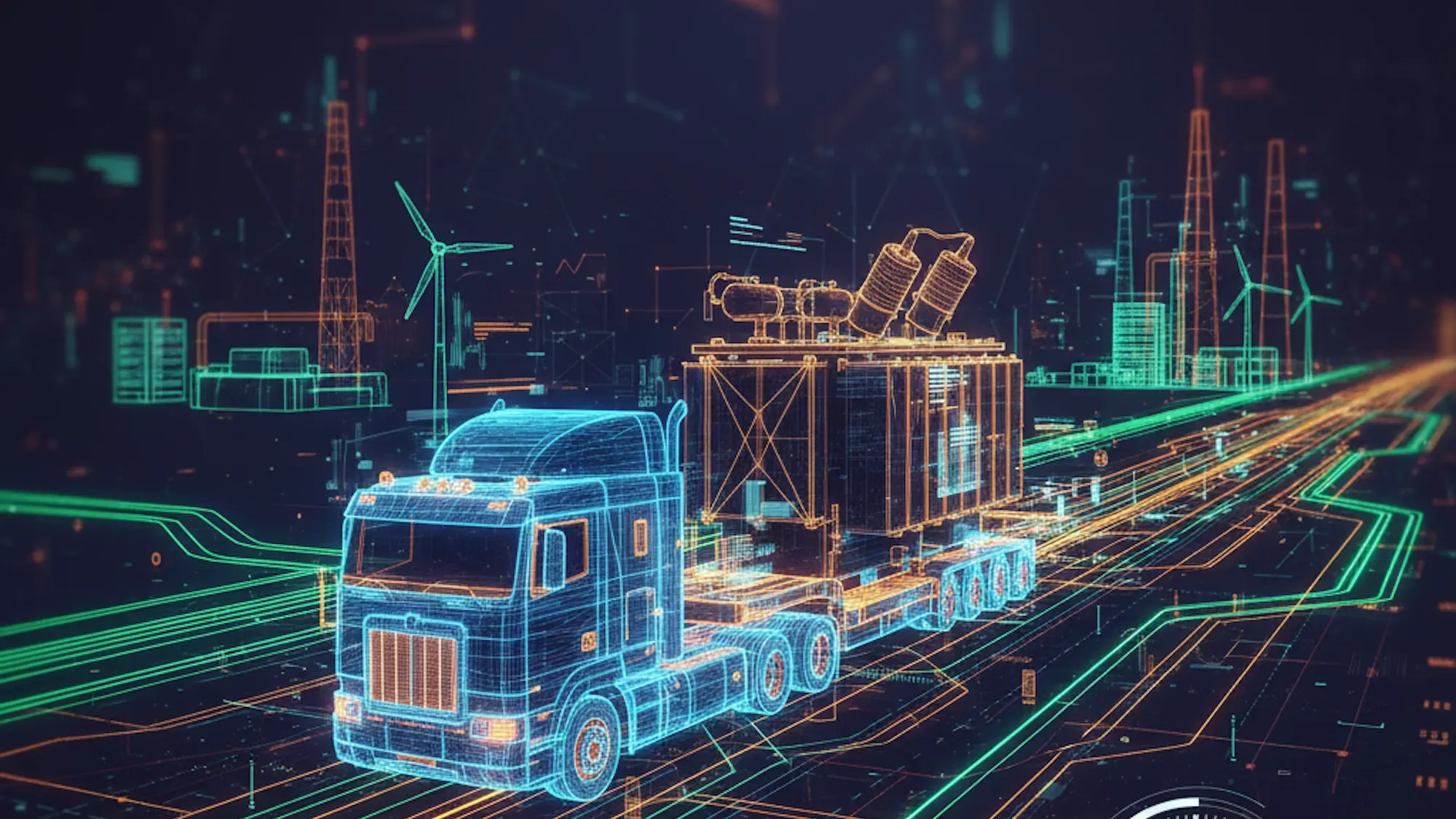
Modern heavy machinery is an intelligent network, reporting thousands of data points via telematics data and Industrial IoT (IIoT) sensors. These systems monitor everything from vibration and pressure to fluid levels and temperature. This data provides the "Why" a part will fail.
However, raw data is only half the battle. The actual breakthrough is the AI-powered predictive leap, which moves this stream of data from a simple "alert" to a predictive forecast:
-
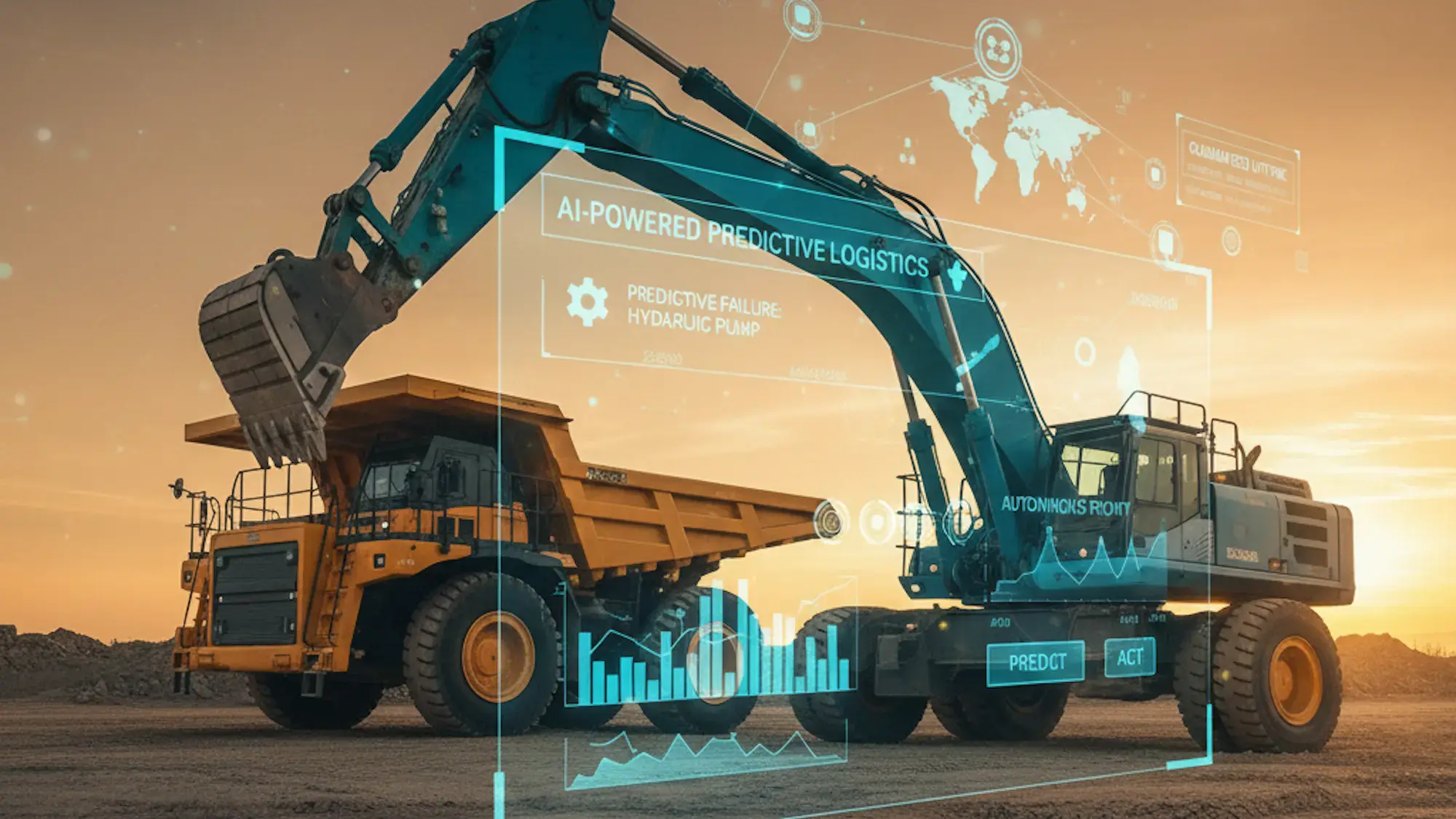
Failure Pattern Recognition: AI models analyze massive sets of historical performance data from thousands of similar machines. The AI identifies subtle shifts and trends, allowing it to forecast the probability of failure for a specific component within a precise time window. For instance: "The main hydraulic pump in Excavator 302 has an 85% chance of failure within the next seven days."
-
Intelligent Query Handling: This AI output isn't just an email for a mechanic; it's a comprehensive solution. It automatically generates an intelligent logistics query—a critical instruction for the supply chain: "Find the closest available replacement pump matching these specifications and determine the fastest, most cost-effective path to delivery on Day 5."
This sophisticated integration is the foundation of the predictive maintenance advantage. As we discussed in "Fixing Supply Chain Blind Spots," this integration allows the SFM partner to pre-empt the failure, turning maintenance from reactive (the machine is broken) to predictive (the service is scheduled).
The Shift to Proactive Freight Management
Once the AI provides the forecast, the entire logistics network switches from passive order processing to proactive freight management. This is where the smart logistics theme comes to life.
Proactive Inventory Positioning (The Smart Logistics Theme)
The AI's forecast drives action before a part is needed, transforming the supply chain into a dynamic, responsive asset. SFM providers use this data to:
-
Optimize Network Stocking: Instead of storing all critical parts in a central warehouse, the provider uses AI-driven forecasting to place standard, high-failure-rate components in smaller regional hubs closer to the predicted points of need.
-
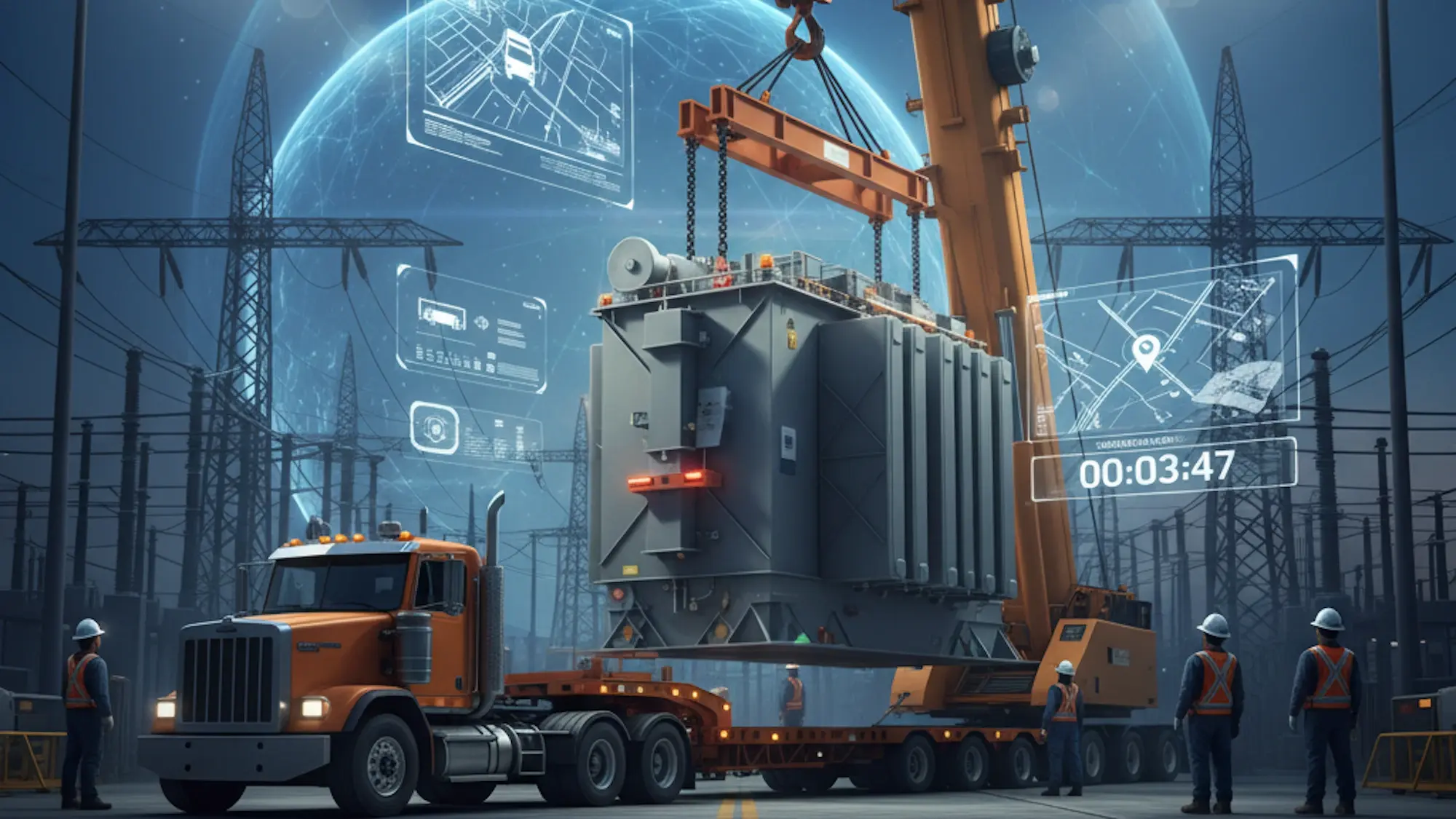
Initiating the Pre-Shipment: Based on a high AI probability of failure, an SFM partner can trigger the first stage of the shipment (e.g., moving the part from the manufacturer to a regional staging area). This proactive inventory management action cuts days off the final-mile lead time, ensuring the part is already regional when the technician is called to the job site.

Agentic AI in Logistics: Managing Complexity
The system managing this movement is increasingly run by Agentic AI—autonomous systems that execute complex, multi-modal shipments with minimal human intervention. An Agentic AI handles the customs paperwork, selects the best carrier (air, truck, or specialized rail), and coordinates final-mile delivery. Its only goal is delivering that single critical component by the predicted time window. This is how you gain supply chain resilience.
This whole process frames a new type of logistics partnership: one where the outcome (guaranteed uptime) is the focus, not just the service (freight delivery). It shifts the conversation from who can move it fastest to who can prevent the machine from ever stopping.
Key Questions for Your SFM Uptime Partner
If guaranteed uptime is your company's goal, you need a partner who operates on prediction, not panic. This is the critical stage of finding your uptime partner.
To separate the traditional movers from the future-focused providers, you need to ask tough questions about their capabilities:
-
How do you integrate with my specific machinery's existing telematics data? Can you use the data we already generate?
-
What specific AI models do you use for component failure analysis and prediction? Can you show me the data?
-
Do you offer proactive inventory pre-positioning based on my fleet's predictive maintenance needs? How does your network stock change in response to my operations?
-
How can you provide end-to-end visibility and cost predictability of critical freight to validate the ROI of this predictive service?
The right answers will point you toward a partner focused on AI integration in SFM and delivering true service-level agreements focused on output.
The Future is Already Operational
The era of reactionary, expensive logistics is over. The competitive edge belongs to those who view their supply chain as a predictive network, not just a transportation expense. By integrating AI and predictive logistics into the heart of their operations, companies can move beyond simply reacting to breakdowns and start future-proofing their logistics strategy.
This is the smart logistics strategy championed by companies like Customodal. We specialize in leveraging data-driven foresight and advanced predictive planning to minimize your downtime. We provide the end-to-end visibility required for a guaranteed uptime model, helping clients transition from a reactive, hot-shot mindset to a smart logistics strategy based on specialized freight management that saves time, money, and stress through proactive operational design.
Ready to transform your most significant operational expense (downtime) into a competitive advantage (guaranteed uptime)? Connect with our experts today to start building your predictive logistics network.