
Share:


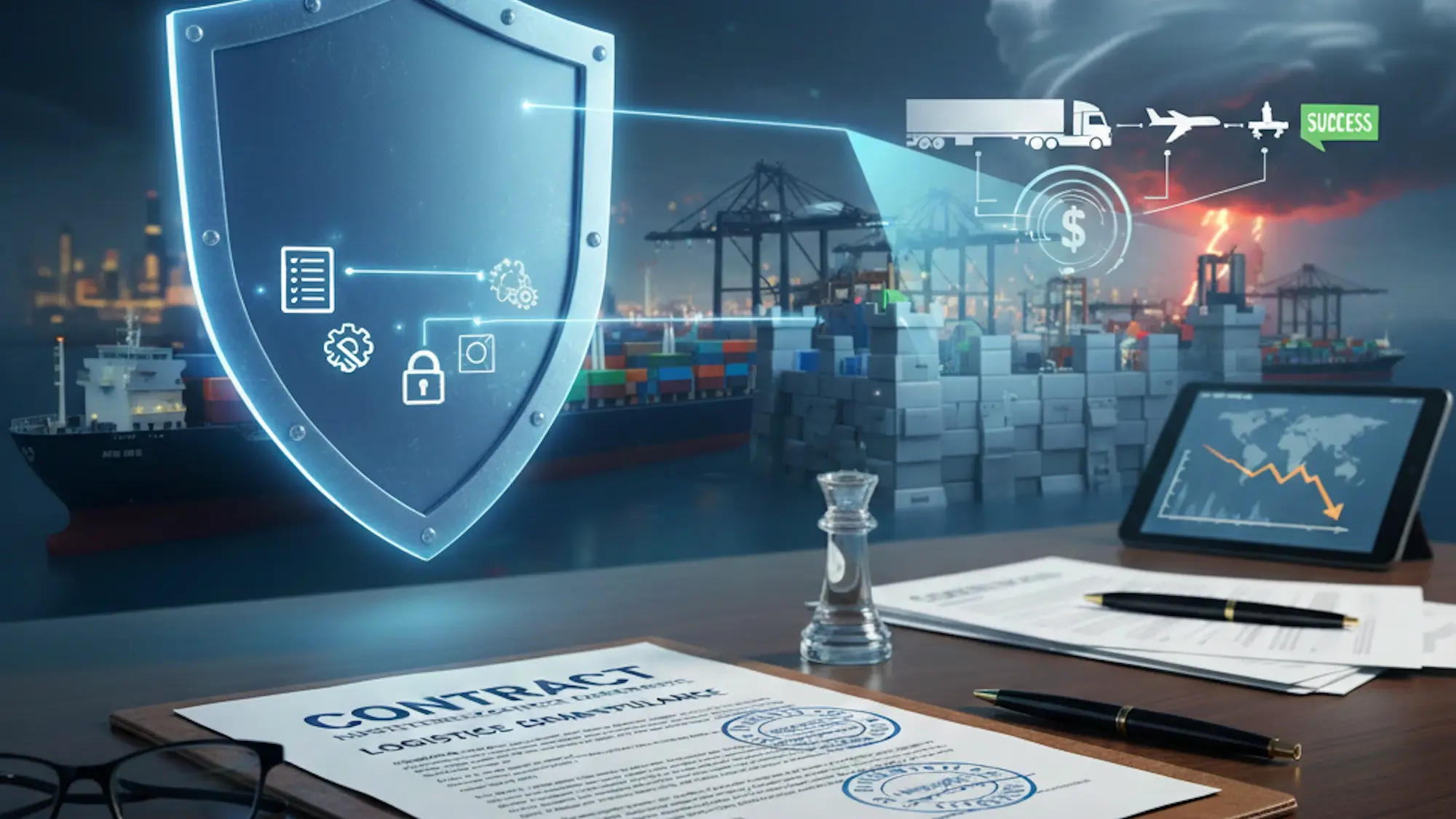
I. The Procurement Imperative for Critical Freight
You are moving critical, high-value assets. Maybe it's sensitive medical equipment. Perhaps it's a massive power transformer for critical infrastructure. In either case, the question for your procurement and legal teams is not if the shipment will get there, but what happens if it doesn't?
When specialized freight is in motion, the conversation must shift. We need to move from logistics execution (the "how") to financial and legal security (the "who pays if something goes wrong?"). Many organizations still rely on standard transportation contracts. However, for specialized, expensive, or mission-critical cargo, relying on this boilerplate legal relationship with a carrier is a liability. It is not an asset.
Procurement and legal teams cannot see the logistics contract as a mere formality. Achieving true operational resilience and guaranteed uptime requires a proactive approach. This means moving beyond the basic protection of a Bill of Lading (BOL). It requires demanding rigorous logistics contract compliance. This is how you secure the supply chain for your balance sheet.
II. The Financial Fault Line: Why Standard Carrier Liability Fails
When an incident occurs, most shippers automatically think they are protected. They assume the value of their goods is covered. This is often a costly mistake.
A. The Bill of Lading: A Legal Minimum, Not a Risk Strategy
The Bill of Lading is essential. It is a receipt, a contract of carriage, and a document of title. It defines the physical movement of your goods. However, legally, the BOL is structured to limit the carrier's exposure first. It is designed to protect the transporter, not the shipper's total financial interest.
This limitation is the critical difference in the freight industry. It is where you find the financial fault line.
B. The Illusion of Coverage: Weight vs. Value
For specialized freight, the financial coverage offered by Standard Carrier Liability is often a fraction of the cargo's real worth. Carriers typically limit their responsibility based on the shipment's weight or shipping unit. This calculation completely ignores the actual commercial value of the goods.
Consider this data point:
Standard motor carrier liability often limits compensation to as little as $0.50 to $2.00 per pound for truckload freight.
Imagine you are shipping a new, custom-fabricated piece of manufacturing machinery. It is valued at $650,000 but weighs only 1,500 pounds. Under a common carrier's minimum liability, you might only receive $3,000 in recovery. That leaves a massive, unmanaged risk gap of nearly $647,000. In specialized industries, where goods are often high-tech and low-weight, this gap is the industry standard—and it is unacceptable.
C. Critical Costs that Carrier Liability Ignores
A major concern for legal and procurement professionals is what the typical carrier policy does not cover. The maximum liability limits never account for the actual cost of a supply chain failure.
Standard liability policies rarely, if ever, cover consequential business losses. These are the costs that truly devastate a business's finances and operations. They include:
-
Lost profits due to manufacturing downtime.
-
The expense of replacing or rebuilding a high-value item quickly.
-
Liquidated damages owed to a third party or customer because of a delayed project.
Furthermore, carrier policies have limitations or exclusions. The liability policies and the Bill of Lading itself allow for several major exceptions—often referred to as the Five Common Law Defenses under the federal Carmack Amendment—that carriers can use to avoid responsibility. These typically include:
-
Act of God (uncontrollable natural disasters, such as an extreme hurricane or earthquake).
-
Act of Public Enemy (acts of war).
-
Inherent Vice of the Goods (natural deterioration or defect within the cargo itself, like natural decay or corrosion).
The carrier only has to prove that one of these exceptions applies and that they were not negligent to deny your claim. This places a significant burden on the shipper to pursue recovery.
For high-stakes assets, you need a contract that guarantees financial recovery, not one that gives the carrier multiple ways out.
III. Elevating Protection: Contractual Compliance in Specialized Freight Management (SFM)
The limitations of common carrier liability should drive the decision to adopt a Specialized Freight Management (SFM) solution. This transition means moving away from a transactional relationship toward a contractually guaranteed partnership. An SFM partnership is defined by a rigorous Master Service Agreement (MSA) that proactively addresses risk and supersedes basic carrier terms. This is a deliberate, contractual transfer of risk.
A. The Critical Clauses Procurement Teams Must Demand
When conducting legal due diligence in logistics, procurement teams must focus on the fine details. You are not just buying transportation; you are buying financial security and operational certainty.
1. Guaranteed Uptime and Dedicated Service Clauses:
The most essential clause for critical freight is a clear, enforceable Service Level Agreement (SLA). These agreements must have consequences, or "teeth." They must define non-negotiable transit milestones and the specific personnel and equipment to be used. The contract must mandate penalties and remedies for non-performance that extend beyond simply refunding the freight charge. Your partner should be invested in your guaranteed uptime.
2. Clear Indemnification and Financial Hold Harmless Clauses:
When a shipment uses a complex, multi-modal solution, many different parties might touch the cargo. This creates a risk gap. The SFM contract must explicitly mandate that the primary provider takes full financial responsibility for damages, even if fault lies with a downstream subcontractor. This eliminates the "finger-pointing" that often stalls claim resolution.
3. Mandatory Regulatory Compliance Assurance:
For specialized cargo, regulatory adherence is a fundamental part of the risk mitigation strategy. Failure to comply can result in massive fines, shipment delays, and legal exposure for your company. Your logistics contract must include a clause for compliance assurance.
We know, for instance, that non-compliance can lead to severe operational issues in customs and trade. For companies navigating complex global movement, we have written about outsourcing trade compliance risk. Similarly, for temperature-sensitive goods, the contract must guarantee adherence to specific cold chain logistics and compliance protocols. The SFM contract should legally indemnify the shipper against any penalties resulting from the forwarder's failure to maintain regulatory standards. This is crucial for sectors dealing with high-risk, regulated items, such as battery storage or medical supplies.
IV. Beyond Indemnity: Securing Comprehensive Freight Insurance & Liability Coverage
Contractual protections are the first line of defense. Robust insurance is the last line, and it is the most crucial for Freight Insurance & Liability.

A. All-Risk Cargo Insurance: The True Standard
A crucial concept in Risk Mitigation Strategy is moving from carrier liability to dedicated cargo insurance. The most comprehensive policy for high-value freight is All-Risk Cargo Insurance.
This policy covers physical loss or damage from any external cause. It is not contingent upon proving carrier negligence. This is the key difference: the shipper does not have to spend months in legal battles proving fault. The insurance company pays the loss quickly and then subrogates against the carrier itself. This shifts the administrative burden and speeds up your financial recovery.
B. Tailored Valuation and Consequential Loss Coverage
For mission-critical infrastructure, logistics failure is expensive. It is essential to understand the hidden costs of cheap logistics for critical infrastructure.
True specialized coverage needs to insure for the full replacement cost, plus a percentage for freight and duty. It must also include coverage for the lost income or interruption resulting from a delayed shipment. Securing coverage that factors in the cost of business interruption—not just the physical value of the item—is the only way to fully protect your organization's revenue stream.
C. Contingent Cargo Liability: Eliminating the Subcontractor Gap
When you hire a logistics partner, they hire carriers. What happens if one of those subcontracted motor carriers has inadequate insurance or a failed policy? This is where the legal concept of Contingent Cargo Liability becomes vital.
Your SFM partner must maintain this coverage. It ensures that if a downstream subcontractor's primary insurance fails or has limits that are too low, the SFM provider's own policy steps in to guarantee coverage. This provides an additional layer of financial protection and peace of mind.
D. Claims Process Optimization: Contractually Defining Speed
The speed of financial recovery directly impacts your business continuity. The typical carrier claim process can drag on for six to twelve months. This is unsustainable for a modern business. A high-quality logistics contract should specify clear, expedited timelines for claim resolution. For example, a specialized provider might contractually guarantee a 30-day payout window for approved claims, backed by their dedicated insurance policy. This is a significant advantage over navigating the bureaucracy of standard carrier claim departments.
V. A Legal and Procurement Checklist for Due Diligence
Global supply chains face constant threats, making contractual resilience a necessity.
- In recent years, global shipping disruptions led to an estimated 120% increase in some key freight indexes, according to UN Trade and Development.
- A recent survey showed that 41% of supply chain leaders reported disruptions due to cyberattacks in the prior year, underscoring the extreme fragility of modern logistics networks.
These statistics highlight that failure is a question of "when," not "if." Your contract must be ready.
Actionable Steps Before Finalizing the Agreement
-
Verify Proof of Insurance: Do not accept a verbal assurance. Demand a copy of the certificate of insurance directly from the broker. Verify that the SFM partner is named as the policyholder of the cargo coverage.
-
Audit Sub-Contractor Management: Contractually ensure the SFM partner maintains comprehensive liability and vetting procedures for all downstream vendors. Ask about their criteria for selecting carriers.
-
Review the Fine Print: Scrutinize the liability limitations and exclusions section of the MSA. Look for any language that attempts to revert the liability caps back to the low, inadequate standard of the BOL.
-
Prioritize Resilience Over Cost: The small additional cost for contractual security is an investment in operational certainty. The True Cost of Risk (TCoR) from a disruption—including lost revenue, replacement costs, and legal fees—will always dwarf the cost of premium insurance and air-tight contracting.
VI. The Value of Contractual Confidence
Protecting critical, high-value assets during transport is fundamentally a legal and financial risk mitigation issue. Your procurement and legal teams must proactively seek out partners whose contracts are engineered to minimize liability and guarantee uptime.
Do not settle for the risk transfer limitations of the Bill of Lading. A trusted Specialized Freight Management provider builds this comprehensive, end-to-end protection into every agreement, allowing your organization to operate with contractual confidence.
At Customodal, we understand that our job is to protect your assets and your balance sheet. We use deep contractual and insurance rigor to manage risk transfer. We provide comprehensive, all-risk solutions to your critical freight demands. Our contracts are structured to give your legal team the confidence that when the unexpected happens, your business continuity is secured.